Why an Urban Mini-City Sells Tickets
Most indoor play venues compete on the number of slides and climbing frames, yet the attractions that sell tickets most reliably are the ones children can turn into a story. A custom modern city indoor playground package gives that story a physical shape: a compact city with streets, shops, a fire station, a hospital and a central square where families move from one role to the next. The format works because it combines open-ended pretend play with the visual drama parents expect from a modern family entertainment center. Children do not simply climb; they deliver packages, serve meals and direct traffic. Parents photograph every moment, and those photographs become free marketing. A venue built around this idea can justify a premium ticket, host school groups on weekdays and refresh its programme through events rather than constant construction.
Planning Streets, Plazas, and Landmarks
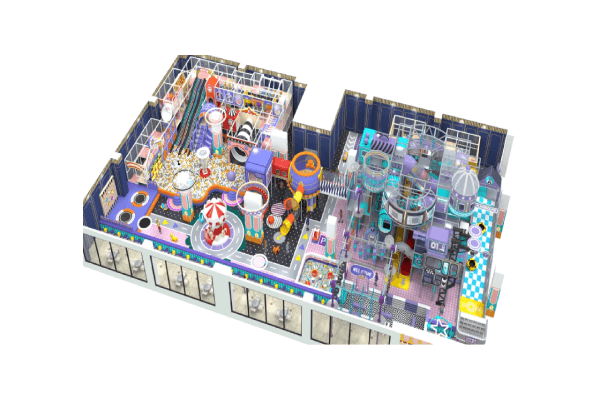
The plan should read like a small town rather than a single play structure. A urban mini-city family entertainment solution begins with a central plaza that works as both orientation point and event space, then branches into short, looping streets so children never run down one long corridor. Place the most photogenic landmark, such as a clock tower or a city hall facade, where it is visible from the entrance, and keep service functions like the pretend supermarket and cafe within sight of the seating area. Vehicles, scooters and delivery carts need a separate loop so wheeled play does not collide with toddlers on foot. Service doors, storage and staff routes should sit behind the facades, leaving the public floor free of clutter and giving parents a clear view of every exit.
Choosing Roles Children Can Act Out
Role-play needs variety to stay interesting for more than one visit. Pair the city with themed indoor playground options that extend the narrative into a castle, space station or adventure course, and the same ticket can cover several distinct play moods. A school group can rotate between the city and a challenge zone, while a birthday party can use the city as a backdrop for games and photographs. This mix also protects revenue during quiet periods, because a themed space can host workshops, storytelling sessions and holiday events without changing the built environment. The important planning decision is to connect the zones with a clear route, so families understand what is included in the ticket and staff can supervise the whole floor from a few key positions.
Building Sightlines and Circulation That Work
Circulation and sightlines decide whether the concept feels calm or chaotic. Design wide avenues at the entrance, narrow the side streets, and use low walls, planters and building fronts to guide movement without turning the space into a maze. Every junction should offer a line of sight to a staff position, and every upper level should have a separate supervised access point. An experienced Miland indoor playground manufacturer can translate these ideas into structural drawings, fire-escape routes and durable finishes that survive daily use. Specify cleanable surfaces, rounded edges and replaceable signage from the start, because a city that looks tired after six months destroys the premium impression the concept depends on. Good circulation also increases capacity, since children spend less time waiting and more time playing.
Turning the Layout Into a Ticket Strategy
Urban planning offers useful lessons for this kind of venue. The history of urban planning shows how successful public spaces balance landmarks, open squares and clear routes so that people naturally gather without being directed. A miniature city borrows the same logic at child scale. A central square becomes the social heart, side streets create quieter pockets, and landmarks help children navigate. The best layouts also leave room for improvisation, because children invent games when they have flexible spaces rather than fixed queues. Treat the floor as a small public realm: test it with groups of different ages, watch where children hesitate, and adjust the furniture and signage before opening. Those observations are more valuable than any drawing alone.
Budgeting, Safety, and a Realistic Opening Plan
Ticket strategy should be built into the design rather than added later. Sell the city as a timed experience with a clear arrival slot, then offer add-ons such as a pretend cafe meal, a guided mission or a party room. A slightly higher price is easier to defend when the space looks intentional, feels clean and offers a narrative that parents can understand in seconds. Budget for staff training, daily inspection and a refresh fund so the city can change its shopfronts and events without a full rebuild. Start with a realistic footprint, use modular units that can be rearranged, and leave space for future expansion. Categories: Indoor Playground, Modern City Theme, Family Entertainment Center, Commercial Playground Equipment, FEC Attractions, Themed Playground Design. Tags: modern city indoor playground, urban playground design, family entertainment center, indoor mini city, themed play space, commercial playground. https://www.milandplay.com/product/modern-city-indoor-playground/
Leave a Reply