A commercial water slide has no single standard price because the cost depends on far more than the visible flume. Design, tower height, slide type, foundation loads, pumps, water supply, queue structure, stairs, landing pool, controls, installation, and site access all influence the project.
For budgeting, the buyer should compare a complete delivered and installed scope. The same framework used to understand How much does it cost to build a water park applies here: define the site and operating requirements first, then ask suppliers to price those requirements consistently.
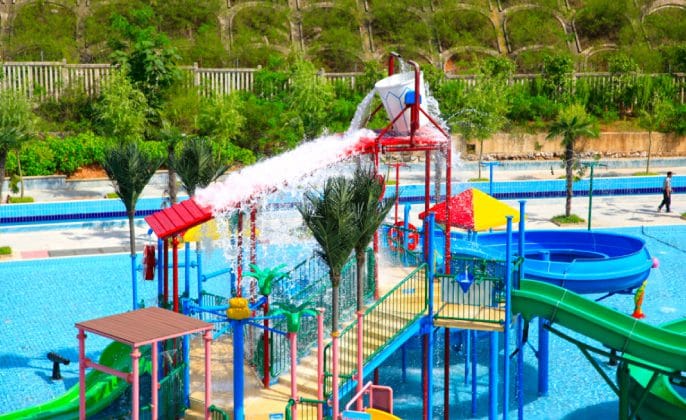
Start with the Slide and Guest Experience
Decide whether the attraction is a body slide, tube slide, family raft slide, or multi-lane product. Each has different structural, water-flow, landing, and staffing requirements. The intended age group and guest experience should be clear before the tower or flume design is finalized.
Height and speed do not automatically create better value. A ride that fits the park’s audience and available plot may perform better than a larger attraction that creates long queues or excludes younger guests.
What a Commercial Water Slide Scope Includes
| Scope area | Typical contents | Main cost driver |
|---|---|---|
| Slide package | Flume, joints, entry, exit, and fasteners | Type, length, height, and finish |
| Tower and access | Structure, stairs, platform, and guarding | Height, loads, and queue capacity |
| Water supply | Pumps, piping, controls, and valves | Flow requirement and route length |
| Landing | Runout, splash area, drainage, and egress | Guest speed and site arrangement |
| Site works | Foundations, utilities, access, and reinstatement | Ground and existing services |
| Delivery | Freight, lifting, installation, and commissioning | Distance and site access |
Site Conditions Change the Price
A slide that fits beside an existing tower and water-treatment system can have a smaller scope than one built on a new site. Soil conditions, drainage, power, access roads, and crane positions all affect construction.
Confirm the location of pumps and valves, maintenance access, and the route from the queue to the tower. The design should show the complete operating envelope, not only the flume footprint.
Water Supply and Drainage
The slide’s hydraulic requirement determines pump and pipe capacity. Long supply routes, high lifts, or multiple simultaneous features can change the equipment package. The landing and drainage system must handle the discharged water and normal cleaning.
Ask for flow calculation, pipe sizes, control logic, strainer access, and isolation points. A slide package that does not identify these interfaces cannot be priced completely.
Materials and Component Quality
Slides, support frames, stairs, nozzles, and fasteners should suit constant moisture and outdoor exposure. Acetal may be used in selected wear-resistant or low-friction components where the manufacturer confirms its application. The material schedule should be read as part of the whole design.
Compare Commercial Water Slide Offers
Review the water play equipment cost using identical slide type, height, landings, and water systems. If one offer excludes tower installation or engineering, the lower total is not comparable.
- Approve a site layout and guest flow.
- Confirm structural, water, and electrical interfaces.
- List factory scope and local site work separately.
- Include delivery, lifting, installation, and training.
- Add spare parts and commissioning requirements.
The equipment budget for a water park should be supported by a technical schedule and local civil quotations. Early amounts can be used for planning, but they should not be treated as final without a defined scope.
Installation and Commissioning
Installation quality affects ride performance and safety. Confirm foundation tolerances, flume alignment, joint sealing, stair assembly, and landing configuration. Commissioning should test flow, entry, ride path, exit, drainage, controls, and emergency procedures.
Request a final issue-for-construction drawing before manufacturing. The drawing should show the slide centerline, tower, foundations, access, water connections, and landing zone in the same coordinate system as the site plan. This reduces the risk of discovering that a structure or service conflicts after the equipment is built.
Review the delivery sequence with the contractor. Large flume sections and tower components need lifting points and temporary storage that do not block other site work. A clear installation plan keeps fabrication, civil construction, and commissioning from competing for the same access area.
Plan the shutdown and maintenance access
Staff need a route to inspect the flume, stairs, pumps, valves, and landing without crossing active guest areas. Maintenance openings and lifting points should be identified in the drawings.
Compare More Than Purchase Price
The equipment budget for a water park is not the same as lifetime value. Consider water consumption, pumping energy, cleaning, inspection, replacement parts, and staffing. A slide that is difficult to service can become expensive even if its initial offer is lower.
To compare water play equipment options and obtain a consistent scope, work with a water slide equipment supplier. A package planned by Dinis water park equipment planning should align the slide, water system, tower, and commissioning requirements before the final budget is approved.
Build the Budget Around a Defined Design
Review the operating cost before finalizing the purchase
The commercial water slide will require water, power, cleaning, inspections, spare parts, and trained staff throughout its life. These costs should be reviewed alongside the installed price. A larger pump package or difficult access route can create a long-term burden even when the equipment offer looks competitive.
Ask the supplier for recommended operating limits, inspection tasks, and critical spares. Then confirm that the park can perform those tasks with its own team or through a local service contract.
A commercial water slide is a complete attraction, not a single catalog item. Start with the guest experience and site, compare suppliers on identical technical scope, and include the full cost of installation and operation.

Leave a Reply