A wave pool and a lazy river create very different water park experiences. A wave pool concentrates energy, equipment, and water treatment around a central basin. A lazy river spreads guests along a long circulation channel with entry points, pumps, and landscape.
Either can require a larger investment than a splash pad or family slide. The correct comparison should include complete construction, mechanical systems, operation, and long-term maintenance. Owners can use How much does it cost to build a water park within the same model after the attraction mix is defined. The wave pool or lazy river comparison is the starting point for that review.
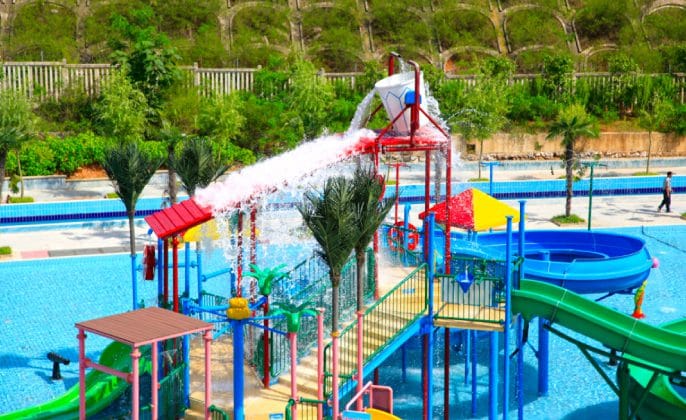
Compare the Core Experience
A wave pool can serve a large number of guests in one place and create a strong visual centerpiece. A lazy river offers a slower, continuous ride and can connect different parts of the park.
The choice should match the park’s audience, land shape, operating strategy, and staffing. A destination park may want both; a smaller venue may need to choose one.
Wave Pool Investment Drivers
The wave pool requires a reinforced basin, wave-generation equipment, water circulation, treatment, controls, deck space, and large guest-capacity management. The plant and structural work are major parts of the cost.
Reinforced concrete can be used in suitable pool structures, but the final design must account for loads, waterproofing, joints, and local code. The pool shell and plant should be engineered together.
Lazy River Investment Drivers
The lazy river investment cost includes the channel, pumps, water treatment, entries and exits, bridges, landscaping, and the guest pathway. Long routes can increase excavation, pipework, and land requirements.
A compact river can reduce travel distance but may feel repetitive. The layout should balance experience, circulation, and efficient plant operation.
Capital Cost Comparison
| Scope | Wave pool | Lazy river |
|---|---|---|
| Primary structure | Large reinforced basin and plant | Long channel and flow path |
| Water systems | Wave generation, high circulation, and treatment | Pumps, flow control, and treatment |
| Guest area | Large deck and supervision zones | Entries, exits, bridges, and pathway |
| Land use | Concentrated footprint | Linear footprint integrated with landscape |
Operating Costs
Review energy, staffing, water treatment, cleaning, maintenance, and planned closure for both. A large central pool may simplify supervision but requires substantial plant operation. A long river may require multiple staff posts and access points.
Tests of the compare wave pool and lazy river costs should use the same opening calendar, utility rates, and maintenance assumptions.
Compare Guest Capacity and Revenue Logic
The wave pool’s revenue case often depends on attracting and holding a large number of guests in a central area. The lazy river supports a slower experience and can distribute guests around the park, but entry points and travel time influence how many rides each guest completes.
Model normal demand, peak demand, and poor-weather periods. Then test the staffing plan for each. A wave pool may need coordinated lifeguard coverage, while a long river may need attendants distributed along the route.
Include lifecycle risk in the decision
Review equipment redundancy, maintenance access, and the consequence of a pump or treatment shutdown. A central pool and a long river fail in different ways, so compare the recovery plan and spare strategy rather than only the initial quote.
Estimate the cost of planned closure, emergency repair, treatment, cleaning, and staff training. A lower construction bid can lose value if it leaves the operator with difficult plant access or expensive service response.
Compare the Two Projects Fairly
Use the same site plan, guest forecast, opening schedule, and utility assumptions for each option. Separate equipment, civil work, installation, commissioning, and annual operating costs.
Ask each supplier to identify exclusions and design assumptions. A lazy river quote may exclude excavation or landscaping, while a wave pool quote may leave the deck and guest facilities to another contractor.
Site and Utility Fit
A wave pool may suit a compact area with a strong central deck, while a lazy river can use an irregular perimeter or connect attractions. Slope, soil, drainage, and the route to the plant area can reverse the apparent cost advantage.
- Map excavation and utility routes.
- Check structural and waterproofing requirements.
- Plan treatment and pump access.
- Keep guest circulation separate from service traffic.
- Review expansion space for both options.
Choose the Higher Value, Not Only the Lower Cost
Working with a wave pool equipment supplier can help compare the full systems. The Dinis wave pool engineering should explain equipment capacity, operating demand, and site requirements before the project selects one attraction.
The question is ultimately which option delivers the strongest guest and business result for the land and budget available.
Commission Both Systems Carefully
For a wave pool, test the wave modes, circulation, treatment, alarms, and emergency procedures. For a lazy river, test flow, entries, exits, isolation valves, clearance, and rescue access.
Commissioning should also confirm that the plant is operable through normal and fault conditions. Operators need to understand which alarms stop the attraction and which require observation.
Review the complete guest route at full design capacity. Confine queues, keep exits clear, and check that the treatment plant and service areas remain secure.
Which Option Usually Requires More?
Neither label has a fixed investment ranking. A compact lazy river with difficult ground conditions can exceed a wave pool on a favorable site, while a large wave pool with major structures and guest facilities can be the larger project. The answer belongs to the specific engineered scope.
Complete a capital and operating comparison before selecting the attraction. The option with the better guest value, site fit, and risk profile is stronger than the one with the lower headline equipment number.
Leave a Reply