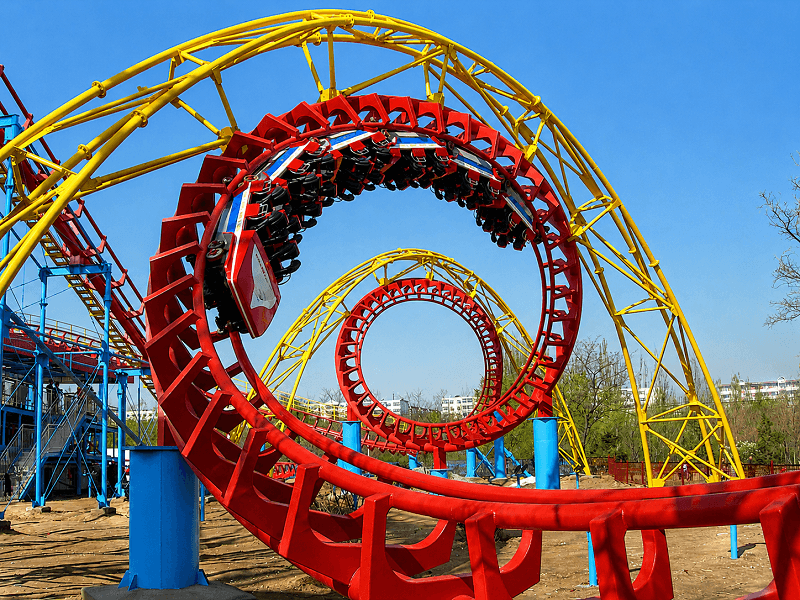
Medium-sized parks face a familiar dilemma: they need a headline attraction to compete, but they cannot justify the land, capital, and operating cost of a large multi-inversion coaster. A four-loop coaster sits in the middle of that range, offering visible thrills in a moderate footprint. This article examines whether a 4-loop roller coaster for medium parks is a smart investment, and what operators should check before committing.
What a 4-Loop Coaster Offers
Four inversions deliver the visual drama guests expect from a thrill ride without the extreme height and speed of a flagship coaster. The layout usually combines vertical loops, a roll, and tight turns, producing an intense but manageable experience that appeals to teenagers and adults. Because the structure is shorter than a mega coaster, it can be integrated into an existing zone rather than requiring a new area of the park.
Capacity, Footprint, and Visitor Flow
Capacity depends on the train size, the number of trains, and the cycle time. A single train with 24 seats and a 90-second dispatch interval serves around 900 guests per hour, which is enough for most medium parks on peak days. The footprint is generally compact enough for a site of one to two hectares, but the safety envelope, queue building, and maintenance access must be planned from the beginning. Estimating the four loop coaster investment should always include these support areas, not only the track.
Comparing with Larger Coaster Options
Before selecting four inversions, compare what a larger layout offers. The 6-loop roller coaster adds more elements and greater visual impact, but it also requires more land, higher structures, and a larger investment. For parks with limited area and a mixed audience, the four-loop version often delivers a better balance between thrills, cost, and operating simplicity.
Guest Appeal and Park Positioning
A coaster with visible loops markets itself: guests see it from the entrance, photographers use it as a backdrop, and the park gains a signature image. For a medium park competing with larger venues nearby, that visibility matters as much as the ride experience. Combining the coaster with a family attraction zone keeps non-riders engaged while their group queues.
Site Requirements and Infrastructure
Coasters place significant loads on foundations and require accurate anchor installation. Confirm soil conditions, foundation design, and the dynamic envelope before finalising the layout. Electrical supply, compressed air if required, and a maintenance access route all need to be part of the early plan, together with drainage around the station and queue area.
Maintenance, Safety, and Operating Costs
Routine inspections, wheel and bearing checks, brake testing, and structure examination are the main recurring costs. A well-built coaster from an experienced supplier with documented spare-part support keeps downtime predictable. Train staff on daily checks and emergency procedures, and keep inspection records from the first operating day.
For most medium-sized parks, a four-loop coaster is a smart choice: it delivers real thrills, reasonable capacity, and strong marketing value without demanding flagship-scale land. Work with an experienced Dinis roller coaster manufacturer that provides layout drawings and installation support, and review the fundamentals of roller coaster design to understand track and train requirements. To compare models and request a site assessment, visit https://themeparkprojects.com/4-loop-roller-coaster-for-sale/.
Leave a Reply