Weather is the cost that does not appear in the quotation. A carousel installed in a hot, humid or coastal park will face UV, salt, rain and wind every day of its life. Two machines that look identical on the factory floor can age very differently after three summers, and the difference is almost entirely in materials and detailing.
This article explains what to look for when choosing a commercial luxury carousel for amusement parks that has to live outdoors, and which specification questions belong in the commercial carousel quotation.
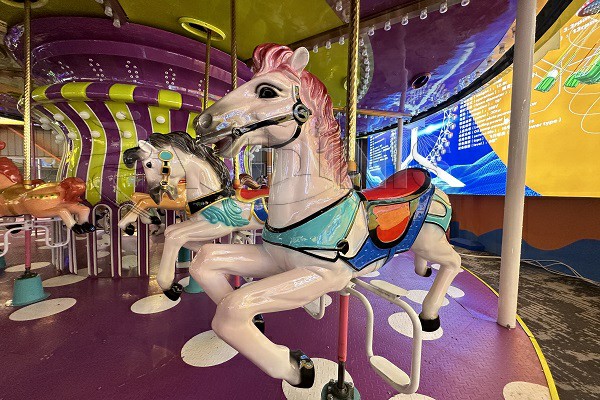
What Weather Resistance Actually Means
- UV stability. Colour and gelcoat must resist fading under continuous sun.
- Moisture resistance. Rain and humidity attack fasteners, bearings and electrical enclosures.
- Salt resistance. Coastal parks need marine-grade protection on steel and fixings.
- Wind loading. The canopy is a large sail; its fixings and foundation must be designed for local wind speeds.
- Drainage. Water must leave the platform and canopy quickly rather than pooling.
Materials That Matter
Horses, carriages and canopy panels are normally moulded in fibreglass or reinforced plastic. The quality of the gelcoat and the resin system determines how long the colour holds and how easily the surface can be cleaned. Decorative components such as seats and play elements may use moulded Polyethylene, which resists impact and moisture better than cheaper plastics.
Structural steel should be galvanised and painted, and all fixings should be stainless or similarly protected. Ask for the specification in writing – ‘anti-rust treatment’ is not a specification, while ‘hot-dip galvanised to a stated standard plus primer and topcoat’ is.
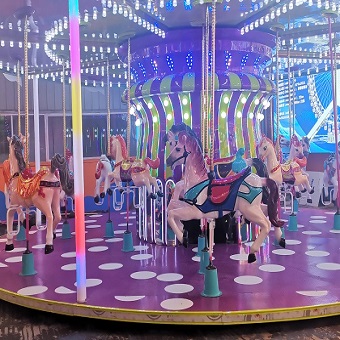
Component-by-Component Checklist
| Component | Weather risk | What to specify |
|---|---|---|
| Canopy panels | UV fading, wind damage | UV-stable material, rated fixings |
| Platform surface | Water pooling, slip risk | Drainage, anti-slip finish |
| Steel structure | Corrosion | Galvanising plus topcoat |
| Fasteners | Rust, seizure | Stainless steel |
| Electrical enclosures | Moisture ingress | IP-rated boxes, sealed glands |
| Lighting | UV and water damage | Outdoor-rated LED, sealed connectors |
Canopy and Drainage Design
The canopy does more than shade guests. It protects the platform, the drive and the control cabinet from direct rain. Its shape should shed water away from the entrance and queue, and its fixings should be accessible for inspection. If the canopy collects water in a low area, the extra weight and corrosion will shorten its life.
Foundation and Water Management
The carousel foundation requirements are not only about load; they are also about water. The foundation should sit above the surrounding drainage path, with a fall away from the structure, and the anchor bolts should be protected from standing water. On sloped sites, a retaining detail may be needed to prevent runoff from eroding the base.
Coastal and Humid Sites
Coastal parks face salt-laden air, which accelerates corrosion on unprotected steel. Specify marine-grade fasteners, additional coating thickness and a maintenance schedule that includes regular washing of salt deposits. Humid inland sites need the same attention to electrical enclosures and bearings, even without salt.
Maintenance for Outdoor Rides
- Wash the structure and canopy quarterly, more often on the coast
- Inspect fixings, seals and drainage before and after the rainy season
- Refinish damaged paint promptly to prevent corrosion spread
- Check lighting connectors and enclosure seals annually
- Record every inspection so trends are visible
What to Ask Before Ordering
- Which UV and corrosion standards do the materials meet?
- What wind speed is the canopy rated for?
- How is water drained from the platform and canopy?
- Which components are stainless or galvanised?
- What maintenance is recommended for the first three years?
Why Outdoor Carousels Fail Prematurely
Most premature failures are not mechanical. They start with water getting into a place it should not be: a fastener that was not sealed, a canopy fixing that loosened, a control cabinet gland that was not tightened. The second most common cause is UV damage to gelcoat, which leaves a chalky surface that traps dirt and cannot be cleaned back to its original finish.
Both are specification and maintenance issues, not manufacturing defects. A carousel specified for indoor use and installed outdoors will usually show both within two seasons.
A Three-Year Maintenance Plan
Year one should focus on inspection and adjustment: check fixings after the first rainy season, re-torque structural bolts, and record any water ingress. Year two adds cleaning and touch-up: wash salt or dust deposits, refinish damaged paint, and replace any seals that have hardened. Year three is the first full review: inspect the canopy structure, test the electrical enclosures, and plan any refinishing before the next peak season.
A written plan makes the difference between a ride that looks new after five years and one that needs a major refurbishment.
Frequently Asked Questions
How often should an outdoor carousel be repainted?
Touch-ups as needed, with a full refinish every five to eight years depending on climate and coating system.
Is fibreglass suitable for coastal parks?
Yes, provided the gelcoat is UV-stable and the steel structure and fasteners are properly protected against salt.
Can a standard carousel be upgraded for outdoor use?
Sometimes, but it is cheaper to specify the outdoor package from the start. Retrofitting coatings and fixings after delivery is labour-intensive.
Next Step
Send us your site location, climate and expected operating hours, and we will specify the right weather package. You can order a carousel from Dinis with an outdoor-ready coating, drainage and canopy specification, and as an outdoor park ride supplier we can advise on foundation and site drainage. To compare options and prices, view specifications and pricing.
Leave a Reply