Ferris wheels are among the most iconic and technically sophisticated attractions in the global amusement industry. Behind their elegant rotation lies a complex manufacturing process that combines structural engineering, precision fabrication, safety compliance, and on-site installation expertise.
For investors and park operators evaluating a Ferris wheel for sale, understanding how a Ferris wheel is manufactured—from conceptual design to final commissioning—is essential for assessing quality, durability, and long-term operational value.
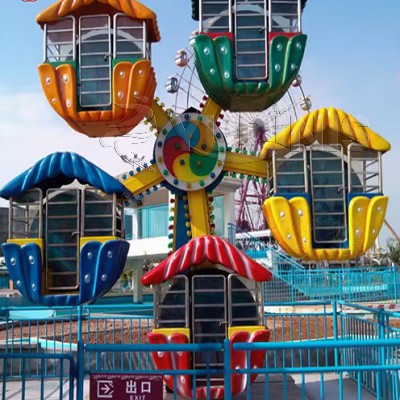
Concept Design and Engineering Planning
The manufacturing process begins with conceptual and structural design. Engineers define the Ferris wheel’s:
Diameter and overall height
Passenger cabin capacity
Load distribution and wind resistance
Operational speed and braking systems
Modern Ferris wheel design relies heavily on finite element analysis (FEA) to simulate stress, fatigue, and dynamic load conditions. These simulations ensure the structure complies with international standards such as ASTM, EN, or GB regulations.
At this stage, Ferris wheel ride supplier also determine whether the project is a portable Ferris wheel, a medium-size park wheel, or a large observation wheel, each requiring different structural and foundation solutions.
Core Materials Used in Ferris Wheel Manufacturing
According to widely accepted engineering references, including Wikipedia, Ferris wheels are primarily constructed using the following materials and components:
Structural Steel Framework
Most Ferris wheels are built from structural steel, selected for its high strength-to-weight ratio and long-term fatigue resistance. Key elements include:
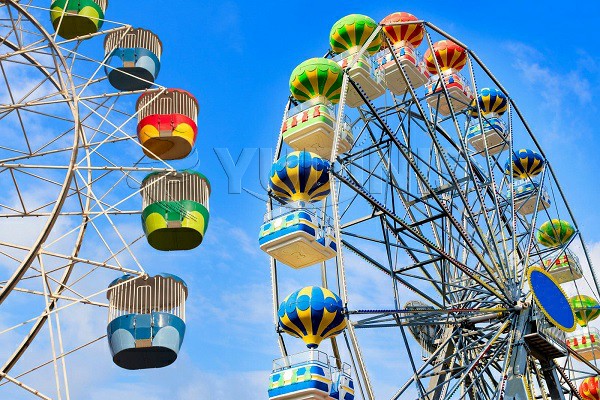
Rim: The outer circular structure supporting passenger cabins
Spokes: Tension or compression members connecting the rim to the hub
Hub: The central load-bearing component connected to the axle
High-grade carbon steel or alloy steel is commonly used to ensure structural integrity under continuous cyclic loading.
Bearings and Axle System
Large-diameter roller bearings or slewing bearings are installed at the main axle to allow smooth rotation while supporting massive vertical and radial loads.
Bolted and Welded Connections
Critical joints use a combination of:
High-strength bolting systems
Certified structural welding (often ultrasonic-tested)
These connections are designed to withstand vibration, wind loads, and long-term operation.
Fabrication and Component Manufacturing
Once the design is finalized, fabrication begins in specialized manufacturing facilities.
Steel Cutting and Forming
Structural steel plates and pipes are cut using CNC plasma or laser cutting machines. Components such as rims, spokes, and support columns are then:
Rolled
Bent
Machined
to meet exact dimensional tolerances.
Welding and Surface Treatment
Welding is performed by certified technicians, followed by:
Non-destructive testing (NDT)
Shot blasting
Anti-corrosion treatment
Surface finishes may include epoxy primer, polyurethane coatings, or hot-dip galvanizing, especially for commercial Ferris wheel for sale projects in coastal or high-humidity environments.
Drive System and Electrical Integration
The rotation of a Ferris wheel is powered by a controlled drive system, typically consisting of:
Electric motors
Gear reducers
Frequency converters (VFDs)
Redundant braking systems
Electrical control systems manage speed regulation, emergency stops, and passenger loading cycles. Custom-designed Ferris wheels often integrate PLC-based automation and remote monitoring systems.
Cabin Manufacturing and Safety Features
Passenger cabins are manufactured separately and mounted onto the rim during installation. Depending on the project, cabins may feature:
Steel or aluminum frames
Tempered glass or polycarbonate panels
Ventilation or air-conditioning systems
Safety features include automatic door locking, emergency communication devices, and compliance with evacuation protocols.
Factory Pre-Assembly and Quality Inspection
Before shipment, manufacturers typically conduct:
Partial or full pre-assembly
No-load and load-bearing tests
Electrical system verification
This stage minimizes on-site risks and ensures the Ferris wheel for sale meets contractual specifications before delivery.
Transportation and On-Site Installation
Ferris wheel for tourist attractions are transported in modular sections to accommodate international shipping constraints. On-site installation involves:
Foundation preparation (reinforced concrete base)
Main axle erection using cranes
Sequential assembly of rim, spokes, and cabins
Electrical and mechanical commissioning
Installation timelines vary based on wheel size, site conditions, and local regulations.
Final Testing and Commissioning
After installation, the Ferris wheel undergoes comprehensive testing, including:
No-load rotation tests
Full-load operational tests
Emergency braking and power failure simulations
Only after passing all inspections is the ride approved for public operation.
Why Manufacturing Quality Matters When Buying a Ferris Wheel
When evaluating a Ferris wheel for sale, buyers should look beyond appearance and focus on:
Material specifications (structural steel grade, bearings, coatings)
Engineering documentation and certifications
Manufacturing experience and installation support
Long-term maintenance and spare parts availability
A well-manufactured Ferris wheel is not only a visual landmark but also a long-term revenue-generating asset.
Conclusion
From structural steel frameworks and precision bearings to advanced drive systems and on-site installation, the manufacturing of a Ferris wheel is a highly engineered process. Understanding these stages helps buyers make informed decisions and select a Ferris wheel for sale that delivers safety, reliability, and lasting commercial value.
For theme parks, city attractions, and tourism developments, a professionally manufactured Ferris wheel remains a timeless and strategic investment. Click our official website for more professional information: https://www.kidsparksolutions.com/ferris-wheel-for-sale/
Leave a Reply